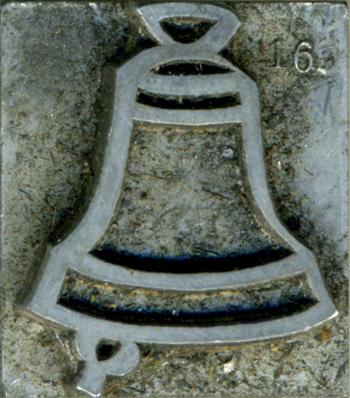
1500 lbs (3/4 Ton) Of Lead Type


Last weekend I joined a group of MFA Design students from the School Of Visual Arts who visited Ross Macdonald's letterpress studio in Connecticut for his annual type camp workshop.

Ross had 6 buckets of lead type destined for melting down that he keeps outside. It was 60 degrees and sunny in mid November so I decided to pick through them. Little did I know, each bucket contained about 250lbs of lead, plus rain water. I grabbed a few shallow buckets and started looking for gems.


As I found type and forms, I arranged them in a old wooden job case that I pulled from under a pile of leaves.


The job case pictured above was the only usable tray I could find. The rest of them looked something like this one below.
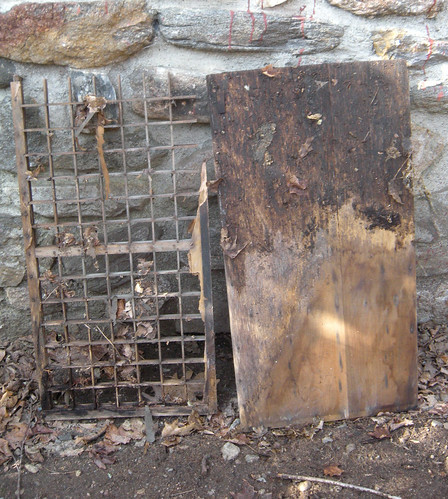


Be sure to watch the podcast of our 2008 visit to Ross's studio here.

Cepaea Snail


Cepaea snail
Originally uploaded by Handmade On Peconic Bay
Here we have a meeting of the slimes discussing the art show their caregiver is having near a fellow colony of huge slugs in East Hampton.

Our garden has become home to a colony of snails.

When you look carefully you'll find tiny baby snails all the way up to fast reacting adults.

Here's some interesting info about these snails:

"Did you know that thanks to a common little snail you can find in your garden, in the park or under a hedge, you can see evolution in your own back yard?

OK, so evolution is a very slow process. Life on Earth started about three-and-a-half billion years ago! It's the tiny changes accumulating over a long, long time that got us here.

It may look like banded snails are dressed-to-kill, but really they are dressed not to be killed. Banded snails are a favorite food of the song thrush and their various shell colors and patterns camouflage them against different backgrounds. But, in some places there are fewer thrushes than there used to be."

Modern Vintage: Cyanotypes By Matt Shapoff

Countdown begins, 3 days until my unique solo exhibition, hosted by Dr. Gerry Curatola, to benefit the new Southampton Hospital Wellness Institute.

Please join us for cocktails at the reception for the artist, ME! The show runs from August 22nd to September 18th.

In Celebration of Apollo XI

In Celebration of the Apollo XI flight, This specimen is blind embossed on Reves BFK 300 gsm, the filet mignon of etching papers. The stars are from a Linotype machine, 5 two a bar with one open star at the end :)

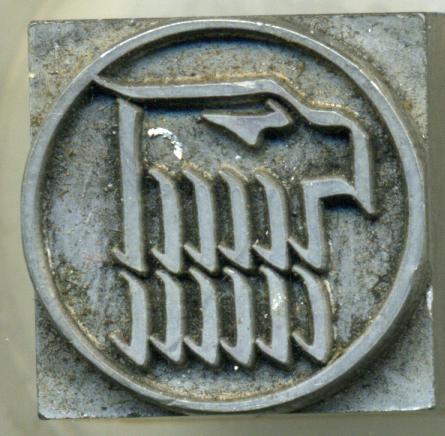
Found cuts amaze me. In one discovery I located this Apollo space craft, and eagle, and about 75 stars.

On July 20th all three where printed on an 1895 Pearl letterpress.

That is July 20th 2009, 40 years after the event. Did I realize it when I bought the cuts the day before, no way!

Steamer Star Strip

The flower shop we used for our wedding has gone under:(

The former greenhouse is now a shit shoppe, oh I mean an antiques dealer. Going through all 36 drawers, I found 7 items that caught my eye: a club, a spinning spinner, a steamer ship, 4 strips of stars, a price tag with a big circle, a Happy Holidays with a funky geometric trees, and an unmounted heraldic crest. You can see them here.

This print use the stars and the steamer ship. I fell in love with it after the first impression of the steamer was made. The stars on the angle proved to me I need more press furniture :)

It reminds me of an Airmail envelope or steam ship label.

Fire Island Lighthouse

this 3 x 3 inch gem was a happy discovery. It's a detail of a larger negative but i found the moment the water started washing away the unexposed chemistry, the print that i had created a dream. The soft edges and fine detail made me wanted to climb inside. Crazy thing is we can. This was created in a social networking system called Second Life. It's a virtual world where i collaborate with builders, historians, researchers and artists.

you can find this print for sale at supermarkethq.com/product/fire-island-light-van-dyke-brown-print-2

Using the Pearl #3


It's ironic that while learning to use an 1895 Pearl #3 letterpress i would also be experimenting with an HDV camera, capture methods, and compression codecs.

The angles and lighting where done with a project in mind. My friend RJ Kikuchiyo will be creating a working model of this press in second life. He need sound samples and some visual record of how things work. From the exploded view of the patent he will be creating the press over the next few months.

The Classic Cyanotype


As described in this section of "The Chemistry of Photography",
By William Jerome Harrison the Cyanotype process is very unique.

The simple mixture of Iron Salts, coated on to watercolor paper and exposed to sunlight creates a latent image in a grayish tone. Once washed the unexposed chemistry is removed leaving a dark blue image on a paper white ground.

Below are two recent examples using digital negatives i created from a rendering of the sailing ship The Evangeline, and Kate's Light, the renderings where created by virtual artist R.J. Cote.

sailboat001lighthouse001

want to see a how to video? check this out


Digital Cyanotype from matthew shapoff on Vimeo.

Van Dyke Brown


Seen in this video are several prints available through my Etsy store which can be found at the top of this page at http://handmadeonpeconicbay.com

Van Dyke Brown is an early photographic printing process.

The Vandyke brown print is based on the first iron-silver process, the argentotype, invented in 1842 by the English astronomer, Sir John Herschel. Both processes utilize the action of light on ferric salts and their chemistry is very similar. The Vandyke process gets its name from its similarity in color to the deep brown pigment used by the Flemish painter Van Dyck. Vandyke brown prints are very simple and economical to make, with the sensitizers consisting of three readily available chemicals. Clearing is carried out in water and fixing is done in a weak solution of hypo.
http://unblinkingeye.com/Articles/Vandyke/vandyke.html


you can also see an annotated version of this video on my Youtube Channel http://www.youtube.com/watch?v=MT00C3yMvKo

what type is this?

Next question. Probably more than one answer. When milling recovered mahogany for the press, do i mill to type height and then furniture height?

Locking up a form in the chase


Ok i don't know if i did this right. I was advised the quions should NOT touch the metal, that it should have wood on both sides. My question is, should the whole chase be filled with furniture or just enough to make it all lock up?

here it is in action:


1st Impressions

Video thumbnail. Click to play
88 Miles "door to door". Thats after it traveled from Connecticut and 2 people helped me transfer the 300lbs of press parts from a truck to a Zipcar. I was amazed how much a Honda Fit could hold!

Video thumbnail. Click to play Video thumbnail. Click to play
Click To Play

Two views of operating the Pearl #3

Quackers


The top image is a 2 3/4" square cyanotype gift card of a Mallard duck printed from a digital photo. Beneath it is a 3 part image of the same duck as a vector graphic (bottom left), made by my wife Cyn and printed as a negative, a yellowish plastic photopolymer plate (bottom right) made from the negative and above that a hand embossed impression of the plate on Reeves BFK lightweight paper.

Featured On Etsy's Storque

Our "Happy Holidays" giclee art print card with dancing snowflake ornaments, in our fave beach-y holiday colors: ocean, grass and rust.

Check it out today on the Etsy Storque showcase.

Snow Flake - The making of

This is a solarplate of the snowflake design we are currently working on in our studio. I used Pictorico transparency material to make the film with an Epson 2400.

HMPB at Cynthiarybakoff.com

It's here! A holiday selection available upon request


The Bees Loves These

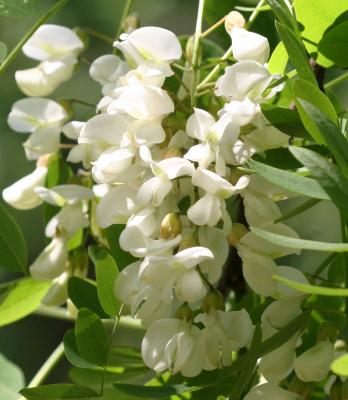
Locust tree blossom, Robinia pseudoacacia. Locust trees have plump white blossoms and with a sweet perfume permeating the salty air around Peconic Bay in springtime. This specimen was pressed and dried and printed on the beach.

Google Analytics Map


Google Analytics Map
Originally uploaded by Kat2 Kit
I'm finding the Google Analytics Map section to be a lot like DXing. My uncle was very big into ham radio, and he would exchange postcards with the people he contacted. I remember, as a kid, a wall map with these postcards push pinned to it from all the places around the world he had reached. There's a part of Google Analytics Maps that shows the world with dots of the places your viewers are coming from. It's like a 21st century version of my uncle's cork board wall map.

Nest and Eggs


http://www.etsy.com/view_listing.php?listing_id=18149633&ref=em

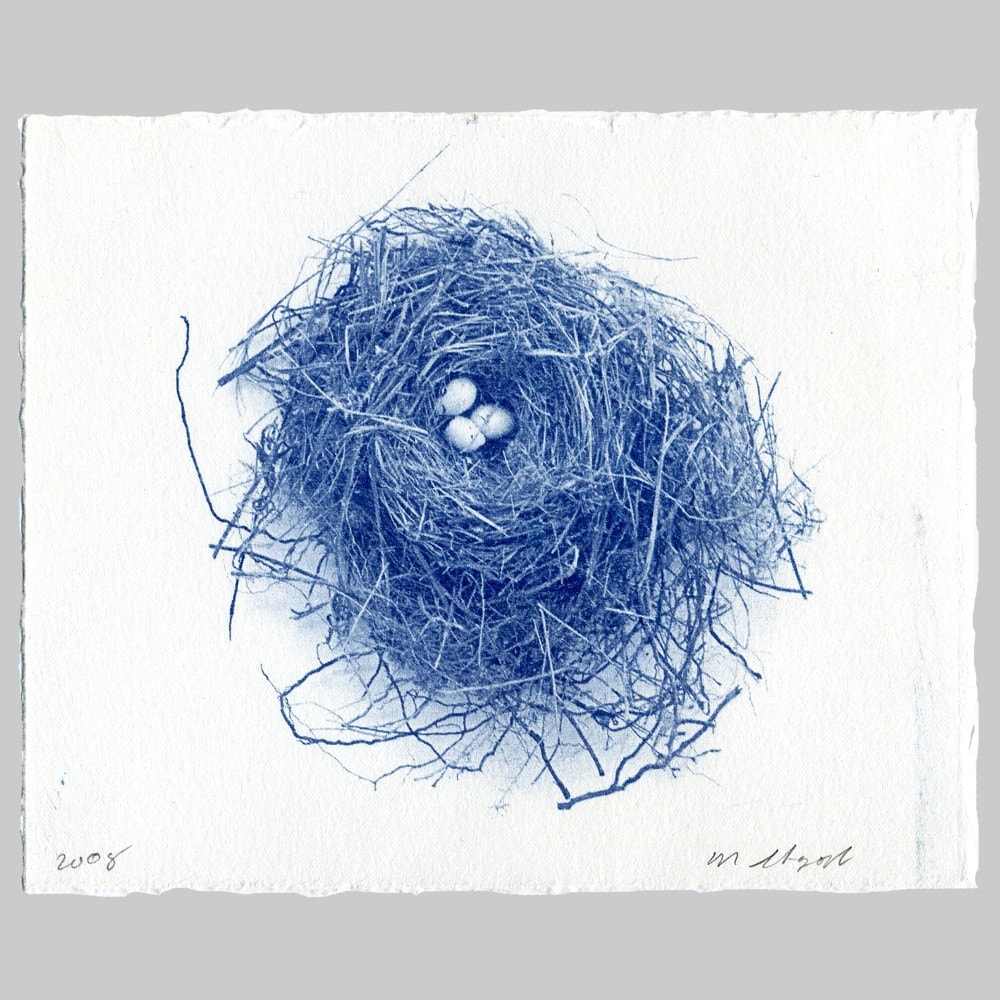
When birds build a nest on your house, it's a sign of good luck and a peaceful home. This nest was build above our outdoor speakers, they must also like my music :)

This Is Beach

"This is Beach" was inspired by the music of Glen Velez and Lori Cotler. Photographed at eight frames per second, I animated a pan through the area I collect most of my specimens from.

A Basil In Winter


This recipe is inspired by a friend who made us hot lemon tea after a long winter hike in upstate New York. Anyone one who knows Matt, knows makes Cyanotypes of basil flowers, grows basil year round and adds it to everything he cooks, so it's no surprise he would find a way to drink it! This recipe calls for fresh lemon basil, a citrus scented and flavored variety, which Matt grows under lights in the winter, but you can substitute other herbs, more readily available such as sweet basil or mint.

Matt's Winter Lemon Basil Tea

1 lemon, no rind

2 sprigs fresh lemon basil

Boiling water

Honey to taste

Peel the rind off a lemon and cut in half, removing any seeds. place each lemon half in a cup. place a sprig of basil in each cup and mash the lemon and basil together, to release the flavors. Pour boiling water in each cup. Let steep for 3-5 minutes. If you don't care for lemon pulp, you may strain the mixture after steeping. Add your favorite honey to taste.

Serves 2 cold people on a winter night.

Welcome To Handmade On Peconic Bay

Using 19th century photographic techniques, artist and photographer Matt Shapoff spends his weekends capturing the marine life, dead or alive, on Peconic Bay, a tidal estuary located between the North and South Forks of Long Island. Matt's favorite subjects are native Peconic fauna and flora, including wild flowers, grasses, and “curiosities” which wash up on the beach, such as crabs, conch shells and sculptural driftwood.

Subjects are directly exposed "in the field", using 19th century photographic techniques to produce single or open edition Cyanotype and Van Dyke Brown prints. The Cyanotype is a 19th century photographic process, combining photo sensitized paper with objects and sunlight, to create white silhouettes on a Prussian blue ground. The Van Dyke Brown is a similar process, resulting in white objects on a rich sepia tone ground. Both the natural subject matter and centuries old printing techniques give Matt’s work a decidedly vintage look and feel. The prints are sold individually for framing or made into unique greeting cards and bookmarks.

Matt and his wife Cynthia Rybakoff, a jewelry and graphic designer, have just launched a shop at Etsy.com, featuring Mtt's Cyanotypes, Van Dyke Browns and a collaborative collection of Giclee fine art prints featuring Cynthia's photo illustrations of Peconic specimens in bright colors for the holidays. Cynthia plans to add sterling silver and semi-precious stone jewelry to the mix, in colors inspired by the natural beauty of the Peconic Bay region.

Handmade On Peconic Bay products are also sold at the Parrish Art Museum shop in Southampton, NY and Montage Art & Design in Wilmington, NC. You can also view Matt's gallery at CynthiaRybakoff.com and geo-locate specimens on Google Earth. Read more about Cynthia's jewelry at CynthiaRybakoff.com.
 
Art Blog Directory Locations of visitors to this page